Claude AI vs ChatGPT (2026): Which AI Chatbot Is Better?
The artificial intelligence landscape has shifted dramatically. A few years ago, OpenAI’s ChatGPT was the undisputed king of conversational AI. However, as digital creators, developers, and writers demanded more precise, less robotic, and highly contextual outputs, Anthropic’s Claude AI stepped up to challenge the throne.
If you are a content creator, programmer, or digital entrepreneur in the US, UK, or Canada, choosing the wrong AI tool can cost you hundreds of hours and thousands of dollars in lost productivity. In 2026, you cannot rely on generic tools anymore; you need a platform that understands subtle human nuances.
This massive, in-depth guide will break down everything you need to know about Claude AI, compare it head-to-head with ChatGPT, analyze its core features, and help you decide which tool deserves your monthly subscription fee
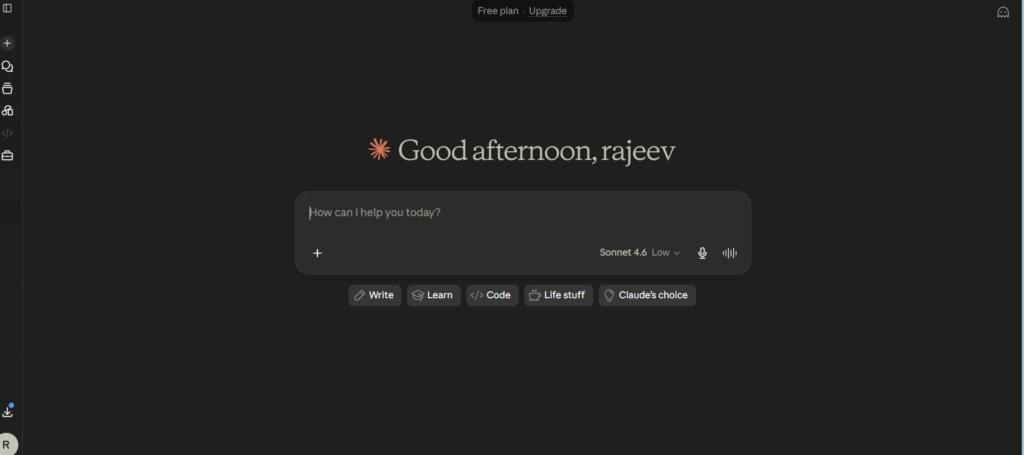
What is Claude AI? (The Anthropic Philosophy)
Claude AI is a suite of large language models (LLMs) developed by Anthropic, an AI safety and research company founded by former senior members of OpenAI (including Daniela and Dario Amodei). Frustrated by the commercial direction and safety compromises of early AI models, the founders set out to build an AI based on an entirely new philosophy: Constitutional AI.
What is Constitutional AI?
Unlike traditional models that are trained solely on human feedback (RLHF) which can sometimes teach the AI to be a “pleaser” rather than accurate, Claude operates under a set of rules a constitution. This constitution is derived from the Universal Declaration of Human Rights and data privacy laws.
The result? In 2026, Claude is widely recognized as the most reliable, least biased, and safest AI assistant on the market, minimizing “hallucinations” (making up fake facts) to an industry-wide low.
Executive Summary: Claude AI vs ChatGPT at a Glance
For those in a rush, here is a breakdown of how both giants stack up across critical operational metrics:
| Operational Metric | Claude AI (Anthropic) | ChatGPT (OpenAI) |
| Primary Strength | Contextual understanding, long-form writing, complex logic. | Multimodal features (Voice, Images), raw speed, web browsing. |
| Writing Tone | Human-like, empathetic, professional, academic. | Analytical, structured, occasionally formulaic/robotic. |
| Context Window Size | Up to 200,000+ Tokens (~150,000 words). | Variable (Standard 32k to 128k depending on model). |
| Coding Capabilities | Exceptional debugging, multi-file codebase analysis. | Excellent for boilerplate code and quick scripts. |
| Native Image Generation | No (Text and Document analysis only). | Yes (Integrated natively via DALL-E 3). |
| Pricing Models | Free Tier / Pro Tier ($20 USD / £18 GBP / $28 CAD). | Free Tier / Plus Tier ($20 USD / £18 GBP / $28 CAD) |
1. Context Window: Why Size Matters for Professionals
In SEO and data analysis, the Context Window is the amount of text the AI can remember and process during a single session. Think of it as the AI’s working short-term memory.
Claude’s 200k Advantage
Claude features a massive context window of up to 200,000 tokens. To put this into perspective, you can upload:
- Three full-length financial audit books.
- An entire codebase containing dozens of interconnected files.
- A complete legal contract spanning hundreds of pages.
When you upload a 100-page PDF into ChatGPT, it often cuts off the text or “forgets” the instructions given at the beginning of the document. Claude, however, uses an advanced retrieval architecture that reads the entire document simultaneously. If you ask Claude to “Find the hidden contradiction on page 87 regarding the tax liabilities,” it will pinpoint it within seconds.
2. Writing Quality: Breaking the “AI Pattern”
If you are running a blog like aitoolza.com, your biggest enemy is the AI Writing Pattern. Google’s spam algorithms are highly sophisticated at detecting generic AI content.
Why ChatGPT Sounds Robotic
ChatGPT has a signature style. Left unprompted, it loves using transitional phrases and buzzwords such as:
- “In the fast-paced digital landscape…”
- “It is crucial to remember…”
- “A testament to…”
- “Delve into the world of…”
When a human reader or a Google reviewer lands on a page filled with these terms, they instantly bounce.
The Claude Difference
Claude writes like an educated human essayist. It understands cadence, sentence length variation, and subtext. If you ask Claude to write an opinion piece on digital marketing, it avoids cheesy corporate jargon and instead focuses on narrative-driven, authoritative text.
Example Prompt Comparison:
Task: Write a paragraph explaining why small businesses fail.
- ChatGPT Output: “In conclusion, a plethora of small businesses experience failure due to a lack of optimal capitalization and navigating the fast-paced market parameters…”
- Claude Output: “Most small businesses don’t fail because their product is bad; they fail because they run out of cash before finding their product-market fit. Managing runway is a brutal reality…”
For content publishers targeting high-tier countries (US, UK, Canada) where readers demand high-quality editorial standards, Claude is the superior choice.
3. Advanced Feature Analysis: Artifacts vs GPTs
Both platforms offer distinct technical ecosystems designed to improve user interaction.
Claude Artifacts: A Separate Workspace
One of Claude’s best user interface features is Artifacts. When you ask Claude to generate a complex asset—such as a piece of code, a dedicated markdown document, a website mockup, or a vector graphic—Claude doesn’t just dump it into the chat window.
Instead, it opens a dedicated interactive side panel (The Artifact window).
[IMAGE PLACEHOLDER: Insert a screenshot here showing Claude’s interface with a main chat on the left and an open “Artifacts” panel showing HTML/CSS code or a document mockup on the right. Alt-text: “Claude AI Artifacts interactive side panel workspace example”]
This allows you to view, edit, and interact with the content in real-time without messing up your main conversation flow. You can ask Claude to tweak line 45 of the code inside the artifact window directly.
ChatGPT GPTs: The Store Model
OpenAI takes a different approach with Custom GPTs. ChatGPT allows users to access a marketplace of specialized mini-bots trained on specific data (e.g., a Canva GPT, a Consensus Research GPT). While useful, the quality of these custom GPTs varies wildly since anyone can build and publish them without strict quality control.
4. Coding & Technical Performance: The Developer’s Choice
For software engineers and web developers across North America and Europe, Claude has become the industry standard for AI pair-programming.
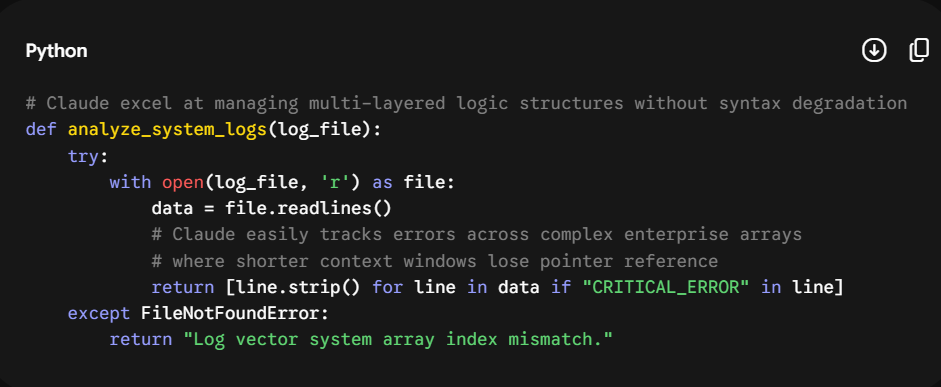
Why Developers Prefer Claude:
- System-Wide Debugging: Instead of copy-pasting a single error code, you can upload your entire backend structure. Claude traces the dependencies across multiple scripts to find the root cause of the error.
- Logic Retention: When building an app over a long chat session, ChatGPT often forgets the variable names or logic architecture defined in the early stages, causing code regression. Claude retains structural architectural constraints flawlessly.
5. Multimodal Capabilities: Where ChatGPT Fights Back
While Claude wins on text comprehension, logical writing, and coding structure, OpenAI’s ChatGPT holds an advantage in multimodal versatility.
- Native Image Generation: ChatGPT includes DALL-E 3. You can type “Create a high-resolution futuristic logo for an AI tool directory website” and it will generate the image instantly. Claude cannot generate images at all; it can only view and analyze images you upload.
- Advanced Voice Mode: ChatGPT’s mobile application features a highly realistic voice engine that can speak, laugh, change accents, and understand emotional inflections in real-time.
- Web Browsing Depth: While both tools can browse the web in 2026, ChatGPT’s integration with live search indices (like Bing) is often faster for tracking hyper-local news or instant stock price tickers.
6. Real-World Use Cases: Which Tool Should You Use?
To maximize your efficiency, you must map your specific daily tasks to the correct tool. Using the wrong tool wastes your API quotas and degrades output quality.
Use Claude AI if you are:
- A Blog Owner/SEO Writer: You need long-form content, comparisons, software guides, and product reviews that look 100% human-written and pass deep algorithm scans.
- An Editor/Researcher: You regularly upload huge whitepapers, medical reports, or legal PDFs and need accurate summaries without the AI making up fake numbers.
- A Programmer/SaaS Builder: You are building web apps, scripts, or fixing complex bugs that involve reading entire project folders.
Use ChatGPT if you are:
- A Social Media Manager: You need constant creative brainstorming, rapid short-form copy, and instant AI-generated social graphics or thumbnails.
- A Casual Day-to-Day User: You want a voice assistant to practice a foreign language, ask general trivia, or plan a travel itinerary using live flight data.
- An Omnichannel Creator: You need text, voice processing, and image creation all consolidated inside a single UI dashboard.
7. Pricing, Subscription Plans, and Value for Money
Both companies use almost identical pricing strategies, but the limits vary depending on server load.
Free Tiers
- Claude Free: Gives you access to their standard model. It has a strict message limit that resets every few hours depending on global traffic density.
- ChatGPT Free: Offers unlimited basic chats, but limits access to their most advanced flagship models during peak hours.
Premium Plans (Claude Pro vs ChatGPT Plus)
- Cost: $20 USD per month (Approx. £18 GBP / $28 CAD + local taxes).
- Claude Pro Benefits: 5x more usage allocation than the free tier, priority server allocation, and early access to experimental updates.
- ChatGPT Plus Benefits: Uncapped image generation, access to custom GPT store, advanced data analysis plug-ins, and full voice mode.
Final Review & Verdict: The 2026 AI Crown Goes To…
There is no single “perfect” AI tool, but the choice comes down to your core needs:
If your primary goal is intellectual output—writing long-form articles that rank on search engines, solving enterprise-level code issues, or synthesizing massive reports—Claude AI is the superior platform. It respects user data privacy, writes with deep authentic empathy, and handles massive files without breaking a sweat.
However, if you require an all-in-one creative companion that generates images, talks back to you seamlessly via voice, and acts as a rapid brainstorming partner, ChatGPT remains an incredible piece of tech.eferred